Built on the Science of Reading, Validated by Research
For over 60 years, Open Court Reading has incorporated trusted learning theory, cognitive science, and valuable teacher input to provide every student with literacy instruction that works.
The Science of Reading in Open Court Reading
Learn how Open Court Reading empowers teachers to implement the Science of Reading in eight critical areas of literacy learning.
Read about best practices for teaching primary grade students the foundational skills needed for language and literacy development. Foundational literacy skills are defined and the implications for instructional practices on student performance are discussed. Phonological and phonemic awareness, decoding and phonics, word analysis, and fluency are all reviewed, with an emphasis on what research has revealed and the best practices for teaching these critical skills.
Open Court Reading was built on research as to how students learn best. As part of the McGraw Hill family of products, the science of learning continues to drive the evolution of Open Court to meet the needs of today’s students and teachers. This eBook has been developed to share some of the current research with you and demonstrate how the science of learning connects with learning to read with Open Court.
Open Court Reading has made me love my job again because I can see the results.
LEANNE DOBSON, 1ST GRADE TEACHER. MARYSVILLE DISTRICT SCHOOLS
Research-Based and Research-Validated
See the proof
Open Court Reading has been proven to achieve undeniable reading gains for readers ranging from beginners to those already fluent. Its research-validated success is:
Demonstrated in classrooms across the country with diverse student populations.
Validated by standardized test results.
Field tested to reveal the effectiveness of its systematic, explicit instruction.
Open Court Reading is recognized as highly effective by top third-party education experts including ESSA, which determined Tier 1 Evidence of effectiveness.
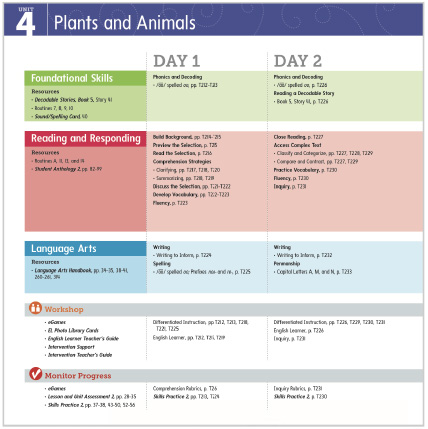
Reading is one of the most complex skills that we learn, and can be a struggle for ALL students. To make the process easier, Open Court Reading uses systematic, explicit instruction with a carefully designed instructional sequence and built-in scaffolding. It is explicit in that explanations are direct and clearly modeled, and students know exactly what they are learning.
The program is systematic in that it builds on prior learning, builds from simple to complex, and covers five components of literacy: phonemic awareness, phonics, fluency, vocabulary, and comprehension. This instructional strategy is recognized for helping students grow into confident, independent readers who are ready to tackle any new content.
Instructional Design
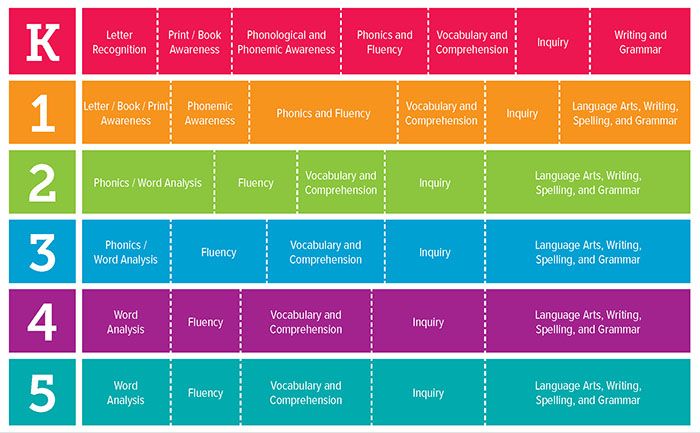
Systematic, explicit instruction is clearly linked across five major areas of reading instruction―phonemic awareness, phonics, fluency, vocabulary, and comprehension. Open Court Reading begins with print and book awareness, along with the alphabetic principle and systematic introduction of sounds and letters. Once students can connect sounds to letters they can begin to learn decoding strategies, such as sound-by-sound blending, whole-word blending, multisyllable blending, and sentence blending. By practicing with the Pre-Decodable and Decodable Books, students increase their accuracy and rate and make the transition from decodable texts to authentic literature.
Instructional Emphasis
Systematic, explicit instruction helps build students' abilities through a logical progression of skills. The instructional emphasis chart shows what we teach and when we teach it. Within and among grade levels, skills are taught and reinforced within a spiraling curriculum. The overlapping pattern of skill-building allows teachers the opportunity to introduce new skills while simultaneously reinforcing those previously learned.
Sound/Spelling Cards
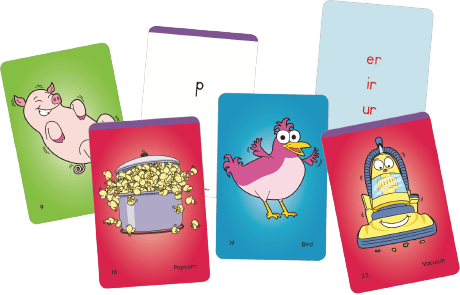
Open Court Reading pioneered the practice of explicit instruction in sound-spelling relationships and the development of unique Sound/Spelling Cards. Each card represents a common English sound and contains the most common spelling or spellings of that sound, as well as a picture that helps students recall the sound. The consonant cards have the target sound at the beginning of the card names. Target sound for short vowels are found in the medial position. Each sound and picture is linked through an alliterative story that accompanies each card.
The Sound/Spelling Cards take the guesswork out of decoding, out of spelling, out of writing.
DAWN PUCKETT, INSTRUCTIONAL COACH, BRADLEY COUNTY SCHOOLS
Foundations for Lifelong Literacy
Included in the Open Court Reading core curriculum, Foundational Skills Kits equip all students with a strong foundation for lifelong literacy. The kits are also available as stand-alone. If your current program doesn't meet your need to build foundational skills, use the stand-alone kits to get the same great content and resources found in the foundational skills strand of Open Court Reading:
Foundational Skills Kits equip all students with a strong foundation for lifelong reading, helping students understand how individual sounds work together to create spoken language. These tools strengthen phonemic awareness, phonics, and fluency skills—allowing learners to master more sophisticated skills.
Word Analysis Kits take students from foundational skills to the application of these skills as they encounter new vocabulary, more complex texts, and more sophisticated writing. When students encounter new words, they have the tools to break down them into smaller units and make meaning from them.
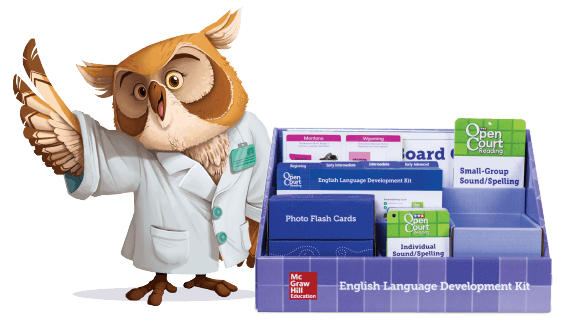
The English Language Development Kit helps English Learners acquire vital vocabulary and language skills. Students can participate meaningfully in the classroom and everyday life with differentiated instruction at four levels of proficiency: Beginning, Early Intermediate, Intermediate, and Early Advanced.
Table showing K-5 Reading Curriculum Pedagogy Kits for Foundational Skills, Word Analysis, and English Language Development
EMBEDDED IN CORE CURRICULUM
CAN BE USED WITH ANY READING CURRICULUM
FOUNDATIONAL SKILLS KITS
(1 kit per grade: K–3)
WORD ANALYSIS KITS
(1 kit per grade: 4–5)
ENGLISH LANGUAGE DEVELOPMENT KIT
(1 kit for K–5)
If you are using a different core program, the Foundational Skills Kits and Word Analysis Kits are available standalone. The EL Development Kit also allows for more targeted instruction for newcomers.
Open Court Reading is science-based and easy for a teacher or substitute to use. The lessons are very clear, with all students getting the same high-quality curriculum, and everything you need is included. Phonic-based learning and phonological awareness hits on all the key aspects of reading, and I like that we can teach the standards through the reading lessons.
Jill Stone, Wellington Exempted Village School District
32 years of teaching experience, K-1
Resources to Support, Challenge, and Inspire
To achieve equity in the classroom, some learners need extra support to reach the same goal. In addition to the embedded strategies in the Teacher’s Editions, in both digital and print formats, Open Court Reading includes a variety of additional resources to give all students access to the same level of rigor and reading development as their peers, as well as challenge those who want to go further.
Embedded Strategies
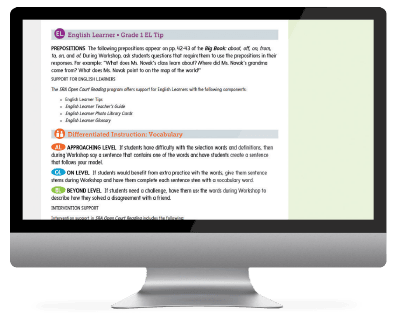
Lessons are divided into Foundational Skills, Reading and Responding, and Language Arts. Each part is supported by differentiated strategies for students at all levels of ability, as well as English language learners. Strategies for Differentiated Instruction and English Learner Tips are provided at point of use in the Teacher Edition, both print and digital.
Workshop Time
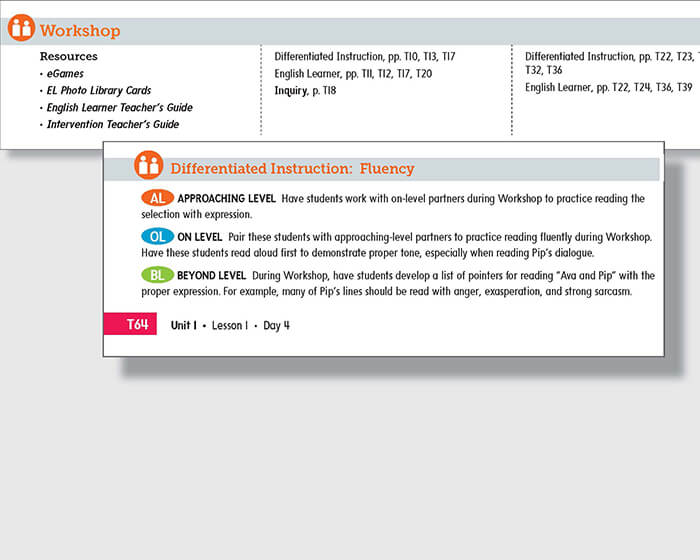
During whole-group instruction, all students have equal access to the same level of rigor. Workshop Time is when teachers can work with small groups of students to meet individual needs. During this time, they review or reteach concepts, or extend concepts for those who need the challenge. It can also be the perfect time to use resources from the English Language Development Kit to support your English learners.
Assessment and Progress Monitoring
Provide ongoing assessments, both formal and informal, to identify any gaps in student learning. Any number of resources available within the program can bridge these gaps.
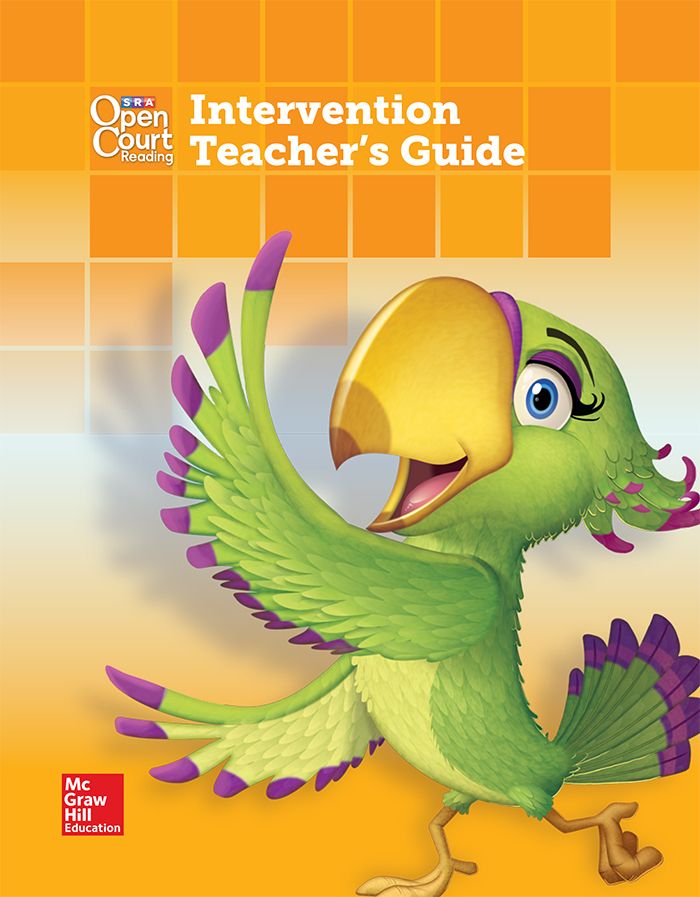
Intervention Teacher's Guide
Provide extra support and practice in the skills and strategies students have learned during whole-group instruction. Teachers may use it for small-group or individual instruction during Workshop Time.
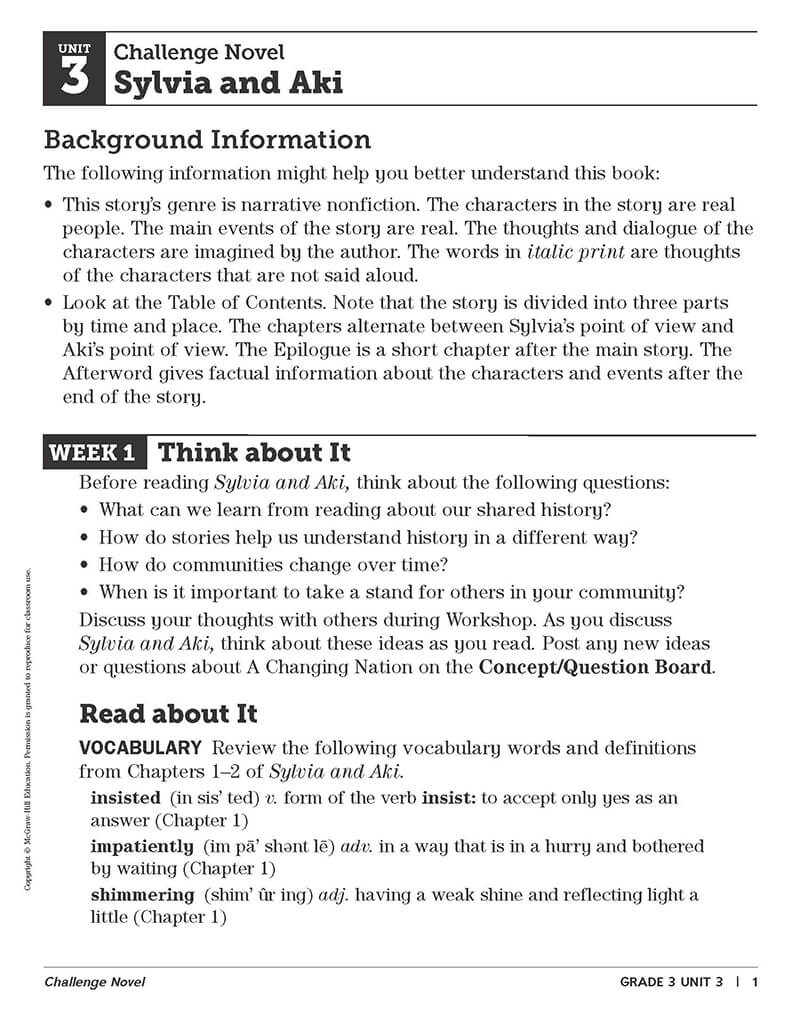
Supplemental Reading: Challenge Novels
Offer additional reading opportunities, with unique content designed around a central theme that relates to each of the six units in grade 2–5.
The program provides structure and opportunities for all students, even those with special needs.
TANDY TAYLOR, DIRECTOR OF CURRICULUM, INSTRUCTION AND ASSESSMENT, CYPSD
It looks like you're outside the United States. Do you want to see your regional version of this page?
2026-03-23T11:19:37.472-04:00
prek12 Pedagogy Open Court Reading <p><span class="text-white"><b><span class="fs-5">Grades K–5</span></b></span></p> <h1><span class="text-white"><span class="fw-light">Pedagogy</span></span></h1> Open Court Reading <p><span class="text-white"><b><span class="fs-5">Grades K–5</span></b></span></p> <h1><span class="text-white"><span class="fw-light">Pedagogy</span></span></h1> <h2>Built on the Science of Reading, Validated by Research</h2> <p>For over 60 years, <i>Open Court Reading</i><span> has incorporated trusted learning theory, cognitive science, and valuable teacher input to provide every student with literacy instruction that works. </span><br> </p> Science of Reading-Based Research-Validated Systematic Instruction Foundational Skills Differentiation <h3>Research-Based and Research-Validated</h3> <p><span class="fs-5">See the proof</span></p> <p><i>Open Court Reading</i> has been proven to achieve undeniable reading gains for readers ranging from beginners to those already fluent. Its research-validated success is:</p> <ul> <li>Demonstrated in classrooms across the country with diverse student populations.</li> <li>Validated by standardized test results.</li> <li>Field tested to reveal the effectiveness of its systematic, explicit instruction.</li> </ul> See the Proof See the Proof <h3>Meets Top Tiers of ESSA Criteria</h3> <p><i>Open Court Reading</i> is recognized as highly effective by top third-party education experts including ESSA, which determined Tier 1 Evidence of effectiveness. <br> </p> View ESSA Research View ESSA Research Tier 1 Rated ESSA <h3>Research about Building Foundational Skills<br> </h3> <p>Read about best practices for teaching primary grade students the foundational skills needed for language and literacy development. Foundational literacy skills are defined and the implications for instructional practices on student performance are discussed. Phonological and phonemic awareness, decoding and phonics, word analysis, and fluency are all reviewed, with an emphasis on what research has revealed and the best practices for teaching these critical skills.</p> View Foundational Skills Research <h3>The Science of Reading in <i>Open Court Reading</i></h3> <p>Learn how <i>Open Court Reading</i> empowers teachers to implement the Science of Reading in eight critical areas of literacy learning. </p> View Research in Action Brochure View Research in Action Brochure <h3>Research about Building Foundational Skills</h3> <p>Read about best practices for teaching primary grade students the foundational skills needed for language and literacy development. Foundational literacy skills are defined and the implications for instructional practices on student performance are discussed. Phonological and phonemic awareness, decoding and phonics, word analysis, and fluency are all reviewed, with an emphasis on what research has revealed and the best practices for teaching these critical skills.</p> View Foundational Skills Research View Foundational Skills Research <h3>Bolstered by Learning Science</h3> <p><i>Open Court Reading</i> was built on research as to how students learn best. As part of the McGraw Hill family of products, the science of learning continues to drive the evolution of Open Court to meet the needs of today’s students and teachers. This eBook has been developed to share some of the current research with you and demonstrate how the science of learning connects with learning to read with Open Court.</p> View Learning Science Research View Learning Science Research <p><span class="text-white"><i>Open Court Reading </i>has made me love my job again because I can see the results.</span></p> <p><span class="text-white">LEANNE DOBSON, 1ST GRADE TEACHER. MARYSVILLE DISTRICT SCHOOLS</span></p> <h3>Systematic, Explicit Instruction</h3> <p><span class="fs-5">What is Systematic, Explicit Instruction?</span></p> <p>Reading is one of the most complex skills that we learn, and can be a struggle for ALL students. To make the process easier, <i>Open Court Reading</i> uses systematic, explicit instruction with a carefully designed instructional sequence and built-in scaffolding. It is explicit in that explanations are direct and clearly modeled, and students know exactly what they are learning.</p> <p>The program is systematic in that it builds on prior learning, builds from simple to complex, and covers five components of literacy: phonemic awareness, phonics, fluency, vocabulary, and comprehension. This instructional strategy is recognized for helping students grow into confident, independent readers who are ready to tackle any new content.</p> Unit 4 Plants and Animlas lesson example showing Foundational Skills, Reading and Responding, Language Arts along with Workshop and Monitor Progress <h3>Instructional Design</h3> <p>Systematic, explicit instruction is clearly linked across five major areas of reading instruction―phonemic awareness, phonics, fluency, vocabulary, and comprehension. <i>Open Court Reading</i> begins with print and book awareness, along with the alphabetic principle and systematic introduction of sounds and letters. Once students can connect sounds to letters they can begin to learn decoding strategies, such as sound-by-sound blending, whole-word blending, multisyllable blending, and sentence blending. By practicing with the Pre-Decodable and Decodable Books, students increase their accuracy and rate and make the transition from decodable texts to authentic literature.</p> Chart showing skills learned in each grade of Open Court Reading <h3>Instructional Emphasis</h3> <p>Systematic, explicit instruction helps build students' abilities through a logical progression of skills. The instructional emphasis chart shows what we teach and when we teach it. Within and among grade levels, skills are taught and reinforced within a spiraling curriculum. The overlapping pattern of skill-building allows teachers the opportunity to introduce new skills while simultaneously reinforcing those previously learned.</p> Open Court Reading Sound/Spelling cards <h3>Sound/Spelling Cards</h3> <p><i>Open Court Reading</i> pioneered the practice of explicit instruction in sound-spelling relationships and the development of unique Sound/Spelling Cards. Each card represents a common English sound and contains the most common spelling or spellings of that sound, as well as a picture that helps students recall the sound. The consonant cards have the target sound at the beginning of the card names. Target sound for short vowels are found in the medial position. Each sound and picture is linked through an alliterative story that accompanies each card.</p> <p><span class="text-white">The Sound/Spelling Cards take the guesswork out of decoding, out of spelling, out of writing.</span></p> <p><span class="text-white">DAWN PUCKETT, INSTRUCTIONAL COACH, BRADLEY COUNTY SCHOOLS</span></p> <h3>Foundations for Lifelong Literacy</h3> <p>Included in the <i>Open Court Reading</i> core curriculum, Foundational Skills Kits equip all students with a strong foundation for lifelong literacy. The kits are also available as stand-alone. If your current program doesn't meet your need to build foundational skills, use the stand-alone kits to get the same great content and resources found in the foundational skills strand of <i>Open Court Reading</i>:</p> Table showing K-5 Reading Curriculum Pedagogy Kits for Foundational Skills, Word Analysis, and English Language Development <p>EMBEDDED IN CORE CURRICULUM</p> <p>CAN BE USED WITH ANY READING CURRICULUM</p> <p><b><span style="color: #80aa3e;">FOUNDATIONAL SKILLS KITS</span></b><br> (1 kit per grade: K–3)</p> <p><b><span style="color: rgb(128,170,62);">WORD ANALYSIS KITS</span></b><br> (1 kit per grade: 4–5)</p> <p><span style="color: #4f5589;"><b>ENGLISH LANGUAGE DEVELOPMENT KIT</b></span><br> (1 kit for K–5)</p> <p><span class="fs-small">If you are using a different core program, the Foundational Skills Kits and Word Analysis Kits are available standalone. The EL Development Kit also allows for more targeted instruction for newcomers.</span></p> <p><a href="/content/mheducation/us/en/ca/en/prek-12/program/microsites/MKTSP-THA19M01/browse/foundational-skills-kit.html" target="_self" title="Foundational Skills Kits">Foundational Skills Kits</a> equip all students with a strong foundation for lifelong reading, helping students understand how individual sounds work together to create spoken language. These tools strengthen phonemic awareness, phonics, and fluency skills—allowing learners to master more sophisticated skills.</p> <p><a href="/content/mheducation/us/en/ca/en/prek-12/program/microsites/MKTSP-THA19M01/browse/word-analysis-kits.html" target="_self" title="Word Analysis Kits">Word Analysis Kits</a> take students from foundational skills to the application of these skills as they encounter new vocabulary, more complex texts, and more sophisticated writing. When students encounter new words, they have the tools to break down them into smaller units and make meaning from them.<br> </p> <p>The <a href="/content/mheducation/us/en/ca/en/prek-12/program/microsites/MKTSP-THA19M01/browse/eld-kit.html" target="_self" title="English Language Development Kit ">English Language Development Kit</a> helps English Learners acquire vital vocabulary and language skills. Students can participate meaningfully in the classroom and everyday life with differentiated instruction at four levels of proficiency: Beginning, Early Intermediate, Intermediate, and Early Advanced.</p> <p><i><span class="text-white">Open Court Reading is science-based and easy for a teacher or substitute to use. The lessons are very clear, with all students getting the same high-quality curriculum, and everything you need is included. Phonic-based learning and phonological awareness hits on all the key aspects of reading, and I like that we can teach the standards through the reading lessons.</span></i></p> <p><span class="text-white">Jill Stone, Wellington Exempted Village School District<br> 32 years of teaching experience, K-1</span></p> <h3>Resources to Support, Challenge, and Inspire</h3> <p>To achieve equity in the classroom, some learners need extra support to reach the same goal. In addition to the embedded strategies in the Teacher’s Editions, in both digital and print formats, <i>Open Court Reading</i> includes a variety of additional resources to give all students access to the same level of rigor and reading development as their peers, as well as challenge those who want to go further.</p> English Learner Grade 1 EL Tip example on monitor <h3>Embedded Strategies</h3> <p>Lessons are divided into Foundational Skills, Reading and Responding, and Language Arts. Each part is supported by differentiated strategies for students at all levels of ability, as well as English language learners. Strategies for Differentiated Instruction and English Learner Tips are provided at point of use in the Teacher Edition, both print and digital.</p> callout for Workshop Resources and where they are used in lessons and Differentiated Instruction: Fluency callout showing levels: Approaching, On Level, and Beyond level <h3>Workshop Time</h3> <p>During whole-group instruction, all students have equal access to the same level of rigor. Workshop Time is when teachers can work with small groups of students to meet individual needs. During this time, they review or reteach concepts, or extend concepts for those who need the challenge. It can also be the perfect time to use resources from the English Language Development Kit to support your English learners.</p> Monitor progress callout showing resources and lessons used and Word Analysis worksheet example <h3>Assessment and Progress Monitoring</h3> <p>Provide ongoing assessments, both formal and informal, to identify any gaps in student learning. Any number of resources available within the program can bridge these gaps.</p> Open Court Reading Intervention Teacher's Guide <h3>Intervention Teacher's Guide</h3> <p>Provide extra support and practice in the skills and strategies students have learned during whole-group instruction. Teachers may use it for small-group or individual instruction during Workshop Time.</p> Example of challenge novel information for Syvia and Aki <h3>Supplemental Reading: Challenge Novels</h3> <p>Offer additional reading opportunities, with unique content designed around a central theme that relates to each of the six units in grade 2–5.</p> View Case Study <p><span class="text-white">The program provides structure and opportunities for all students, even those with special needs.</span></p> <p><span class="text-white">TANDY TAYLOR, DIRECTOR OF CURRICULUM, INSTRUCTION AND ASSESSMENT, CYPSD</span></p> <h2><span class="text-white">Contact Your Sales Rep</span></h2> <p><span class="text-white">Want to start a one-on-one dialogue, get a personal demo, or begin a free trial of <i>Open Court Reading</i>? Contact your local sales rep today.</span><br> </p> Contact a Sales Rep Contact a Sales Rep