Explore mathematics through a flexible five-part lesson design, complete with teacher’s choice between two instructional options to help serve all types of learners in your classroom. This routine-based approach helps streamline daily instruction around fluency, sense-making, and math language for a more structured, productive classroom environment.
K–5 Lesson Model
Launch
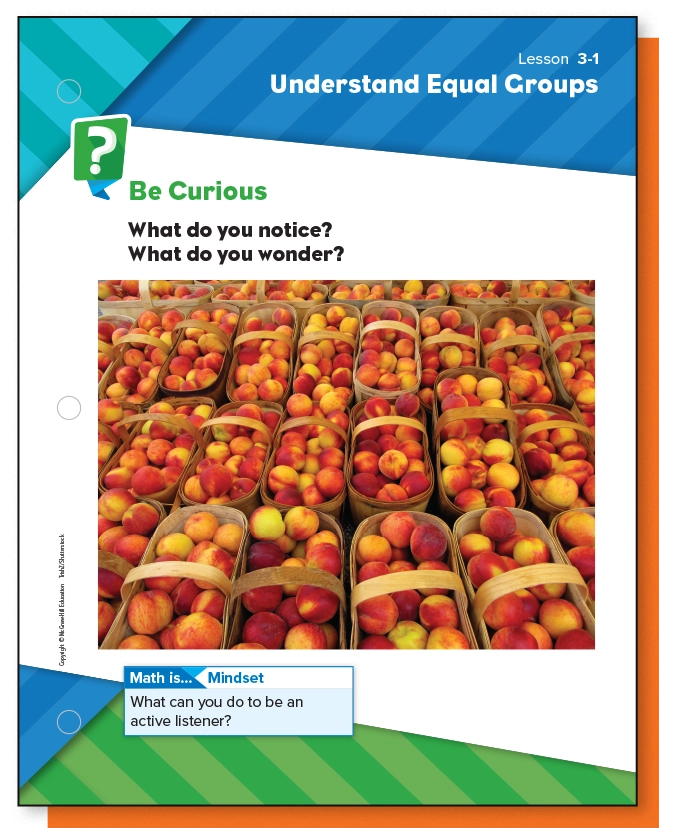
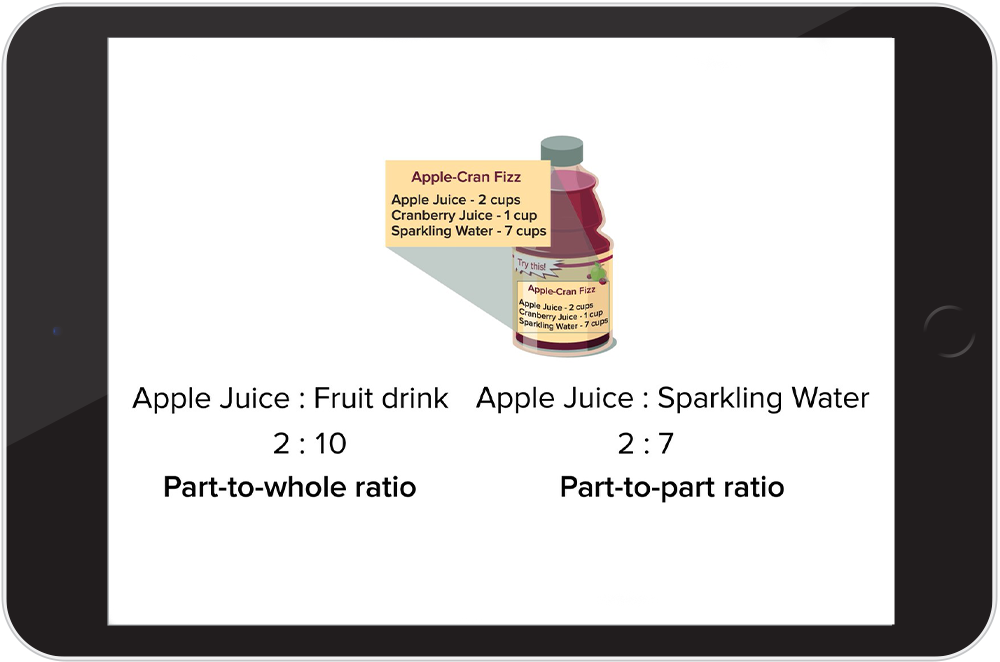
The lesson launch sparks student curiosity and lays the foundation for the learning to come. Sense-making routines and Math Is... Mindset activities provide low-floor, high-ceiling opportunities to initiate thinking and foster ideas from all learners.
Be Curious
Math Is…Mindset
Explore & Develop
Explore & Develop unpacks the lesson content with a choice between two lesson design options. During Activity-Based Exploration, students work together to explore concepts and engage in productive struggle to problem-solve. With Guided Exploration, teachers facilitate exploration through thoughtful discourse and collaboration. Both options promote classroom equity and teacher agency while keeping students at the center of the learning experience.
Practice & Reflect
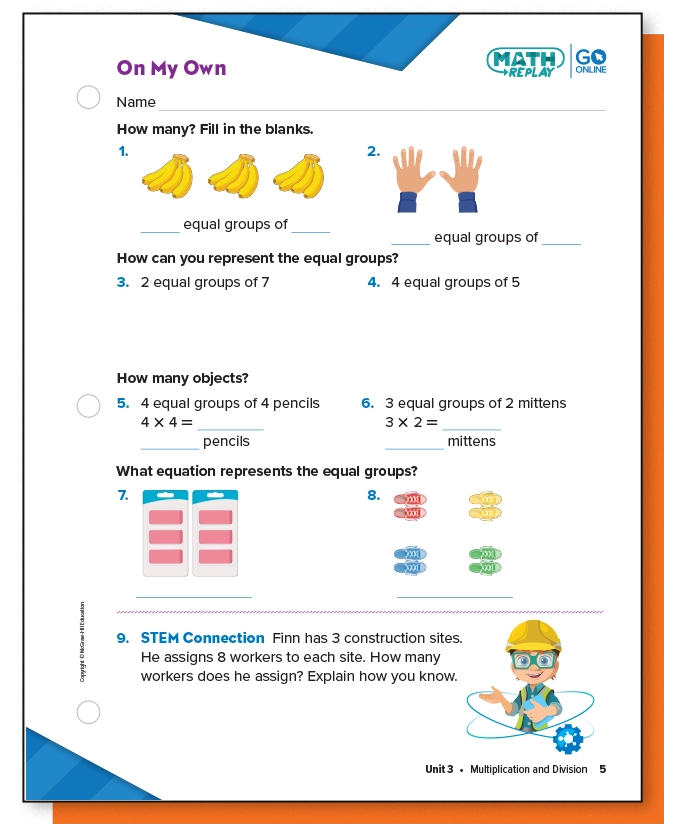
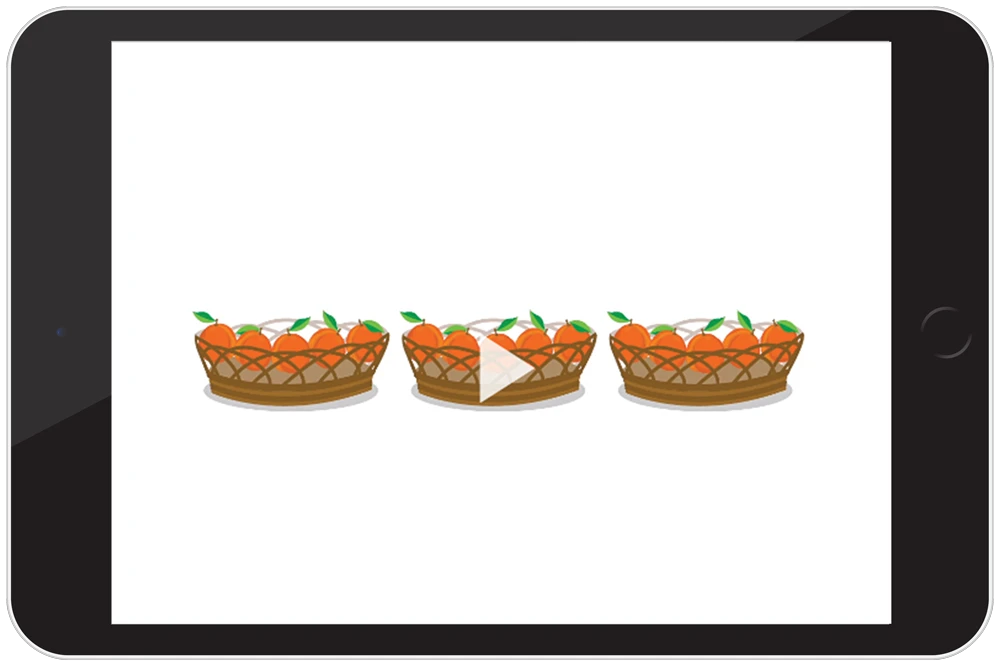
During in-class practice, students complete On My Own activities to apply what they’ve learned, build procedural fluency, and address all elements of rigor. For students in need of a recap, Math Replay Videos quickly re-explain lesson concepts to reference during independent work. Additional practice pages are also available in every lesson with embedded learning aids.
On My Own
Math Replay Videos
Assess
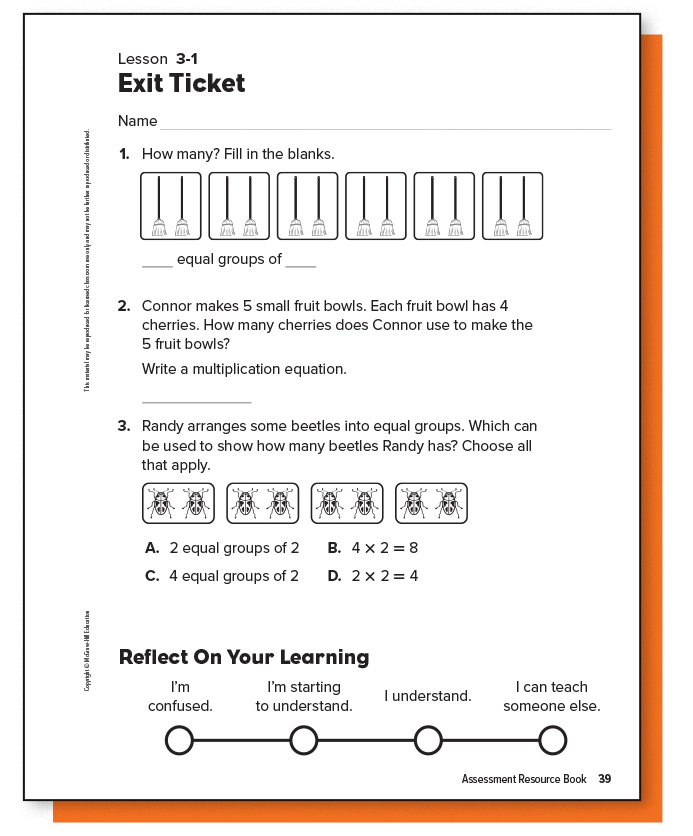
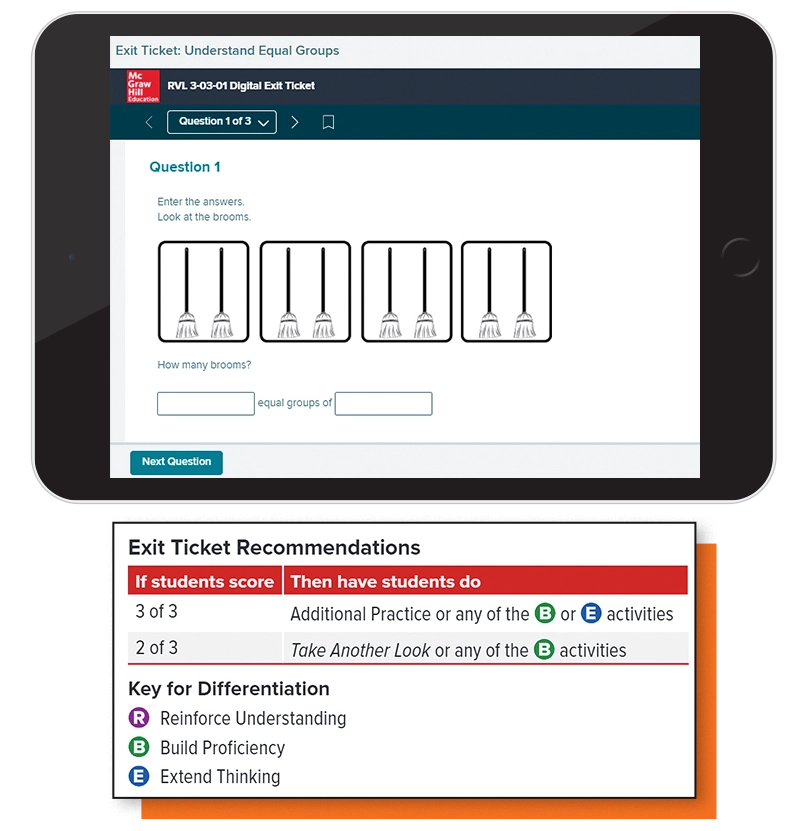
The Exit Ticket includes a daily formative assessment to check for understanding, supplying teachers with data and recommendations for differentiation.
Exit Ticket
Differentiation
Daily differentiation helps support every student on their math learning journey, providing them with a variety of engaging, multimodal activities that reinforce understanding, build proficiency, and/or extend their thinking.
Application Station: Cross-Curricular Connections
6–8 Lesson Model
Launch
The lesson launch sparks curiosity for the learning to come through engaging hooks, sense-making routines, and Math Is… Mindset discussion prompts that initiate thinking and foster ideas from all learners.
Be Curious
Math Is… Mindset
Explore & Develop
Explore & Develop unpacks the lesson content with a choice between two lesson design options. During Activity-Based Exploration, students work together to explore concepts and engage in productive struggle to problem-solve. With Guided Exploration, teachers facilitate exploration through thoughtful discourse and collaboration. Both options promote classroom equity and teacher agency while keeping students at the center of the learning experience.
Assess
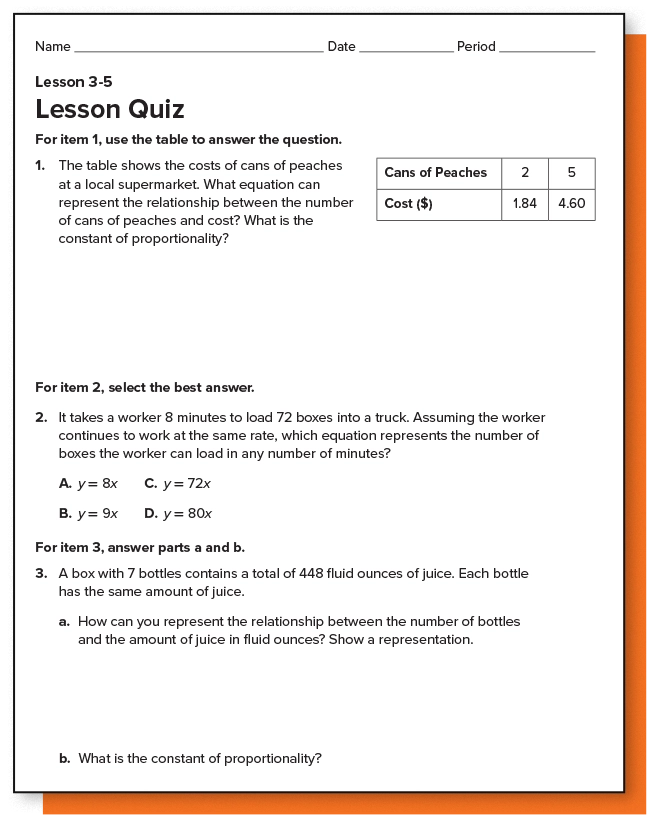
Students work through one or more examples tied to the key concepts, followed by a quick formative assessment within each session. The Exit Ticket in Session 1 measures understanding, and the Lesson Quiz in Session 2 informs differentiation.
Exit Ticket
Lesson Quiz
Practice & Reflect
Students engage in independent practice, where they apply what they’ve learned and build procedural fluency. When the practice is completed online, performance data is instantly captured for the teacher.
Print Practice Page
Math Replay Videos
Differentiation
Daily differentiation helps support every student on their path to understanding, providing students with a variety of engaging, multimodal activities that reinforce understanding, build proficiency, and/or extend their thinking.
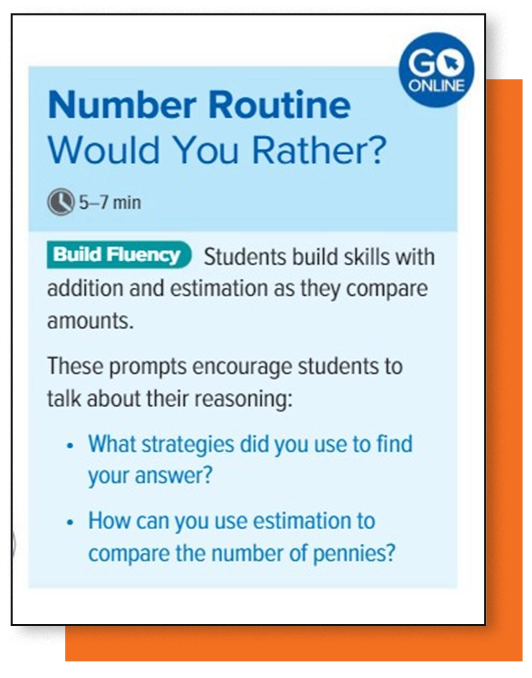
Fluency is more than memorization; it’s about having a deep-rooted understanding and mastery of operations, relationships, and concepts. Reveal Math structures daily fluency activities around practice, routines, spiral review, and game-based learning—engaging students in the lesson content and developing their application of strategy to solve unknown problems.
Support Language Acquisition
Mathematics is not just a series of operations, but a complex language of its own. To help develop and promote the use of math language skills, Reveal Math incorporates a variety of supports throughout each unit and lesson:
Math Language Development mini-lessons in every unit offer designated language support for English Learners and can be taught at any time during the unit.
Multilingual Learner Scaffolds based on WIDA levels (Emerging, Expanding, and Bridging) provide instructional support in English language development as well as differentiated support in math in every lesson.
Language Objectives in each lesson identify a linguistic focus for all learners.
Language of Math promotes the development of key vocabulary terms to support contextual applications.
Developed by the Stanford Center for Assessment, Learning, and Equity, Math Language Routines in every lesson promote all students’ language development in mathematical sense making.
Math Language Development mini-lessons in every unit offer designated language support for English learners and can be taught at any time during the unit.
Multilingual Learner Scaffolds based on WIDA levels (Emerging, Expanding, and Bridging) provide instructional support in English language development as well as differentiated support in math in every lesson.
Language Objectives in each lesson identify a linguistic focus for all learners.
Language of Math promotes the development of key vocabulary terms to support contextual applications.
Developed by the Stanford Center for Assessment, Learning, and Equity, Math Language Routines in every lesson promote all students’ language development in mathematical sense-making.
Assess and Address Needs
Reveal Math offers a comprehensive set of diagnostic, formative, and summative assessment tools—all available in both print and digital formats. With this data, teachers can generate actionable performance reports (Class Activity Reports and Standards Reports) in the Digital Teacher Center to help them make data-driven instructional decisions.
Type: Diagnostic
ASSESSMENT
Course Diagnostic
HOW OFTEN
Beginning of the school year
DESCRIPTION
Diagnoses students’ strengths and weaknesses with prerequisite concepts and skills for the upcoming year
ASSESSMENT
Unit Diagnostic
HOW OFTEN
Beginning of each unit
DESCRIPTION
Diagnoses students’ strengths and weaknesses with prerequisite concepts and skills for the upcoming unit
Table showing Reveal Math Diagnostic Tool with Assessment Type, Frequency, and Description
ASSESSMENT
HOW OFTEN
DESCRIPTION
Course Diagnostic
Beginning of the school year
Diagnoses students’ strengths and weaknesses with prerequisite concepts and skills for the upcoming year
Unit Diagnostic
Beginning of each unit
Diagnoses students’ strengths and weaknesses with prerequisite concepts and skills for the upcoming unit
Type: Formative
ASSESSMENT
Work Together* only applies to K–5
HOW OFTEN
During a lesson
DESCRIPTION
Assesses students’ understanding of the concepts and skills presented in Learn
ASSESSMENT
Exit Ticket
HOW OFTEN
End of each lesson
DESCRIPTION
Assesses students’ conceptual understanding and procedural fluency with lesson concepts and skills
ASSESSMENT
Lesson Quiz* only applies to 6–8
HOW OFTEN
After a lesson
DESCRIPTION
Assesses student conceptual understanding with lesson concepts and skills.
ASSESSMENT
Math Probe
HOW OFTEN
During a unit
DESCRIPTION
Identifies common misconceptions
Table showing Reveal Math Formative Tool with Assessment Type, Frequency, and Description
ASSESSMENT
HOW OFTEN
DESCRIPTION
Work Together* only applies to K–5
During a lesson
Assesses students’ understanding of the concepts and skills presented in Learn
Exit Ticket
End of each lesson
Assesses students’ conceptual understanding and procedural fluency with lesson concepts and skills
Lesson Quiz* only applies to 6–8
After a lesson
Assesses student conceptual understanding with lesson concepts and skills.
Math Probe
During a unit
Identifies common misconceptions
Type: Summative
ASSESSMENT
Unit Assessment, Forms A and B
HOW OFTEN
End of each unit
DESCRIPTION
Evaluates students’ understanding of and fluency with unit concepts and skills
ASSESSMENT
Unit Performance Task
HOW OFTEN
End of each unit
DESCRIPTION
Evaluates students’ ability to apply concepts and skills learned
ASSESSMENT
Benchmark Assessments
HOW OFTEN
After multiple units
DESCRIPTION
Evaluates students’ understanding of concepts and skills taught in multiple units
ASSESSMENT
Summative Assessment
HOW OFTEN
End of the school year
DESCRIPTION
Evaluates students’ proficiency with concepts and skills taught over the school year
Table showing Reveal Math Summative Tool with Assessment Type, Frequency, and Description
ASSESSMENT
HOW OFTEN
DESCRIPTION
Unit Assessment, Forms A and B
End of each unit
Evaluates students’ understanding of and fluency with unit concepts and skills
Unit Performance Task
End of each unit
Evaluates students’ ability to apply concepts and skills learned
Benchmark Assessments
After multiple units
Evaluates students’ understanding of concepts and skills taught in multiple units
Summative Assessment
End of the school year
Evaluates students’ proficiency with concepts and skills taught over the school year
Identify and Rectify Misconceptions
Uncover students’ misconceptions with Math Probes, located at point-of-use to help teachers make informed instructional choices targeting specific math concepts. Each probe begins by assessing students’ understanding of concepts and then asks them to share their thinking. Once misconceptions are identified, teachers can correct them quickly and efficiently with provided remedies.
Measure Knowledge With MAP Growth™
MAP Growth is the market’s most trusted and accurate interim assessment that measures what students know and what they’re ready to learn next. Reveal Math teachers can access powerful MAP Growth data to review unique reports, identify students lacking prerequisite knowledge, and intervene using Targeted Skills Paths to fill knowledge gaps.
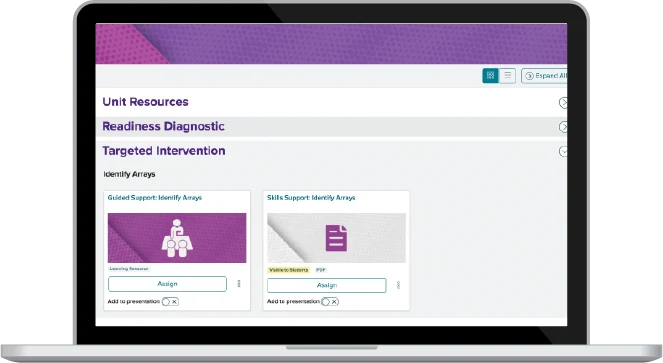
Intervention resources align with each problem within every Unit Assessment and Readiness Diagnostic—a digital intervention tool that assesses and aligns to the prerequisite skills needed to understand the upcoming unit—making it easy to correct misunderstandings and target knowledge gaps.
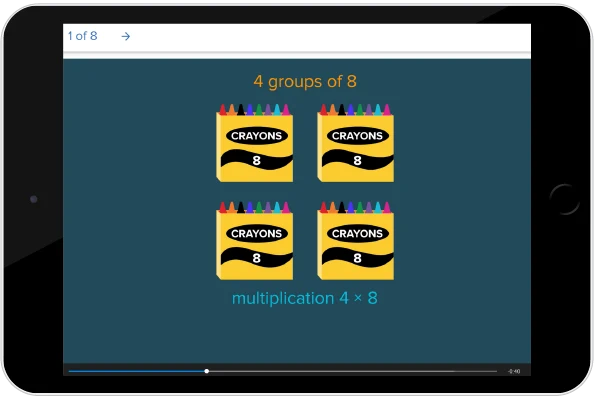
Take Another Look digital mini-lessons provide quick, actionable data to help inform instruction while supporting each student with a three-part, gradual-release activity:
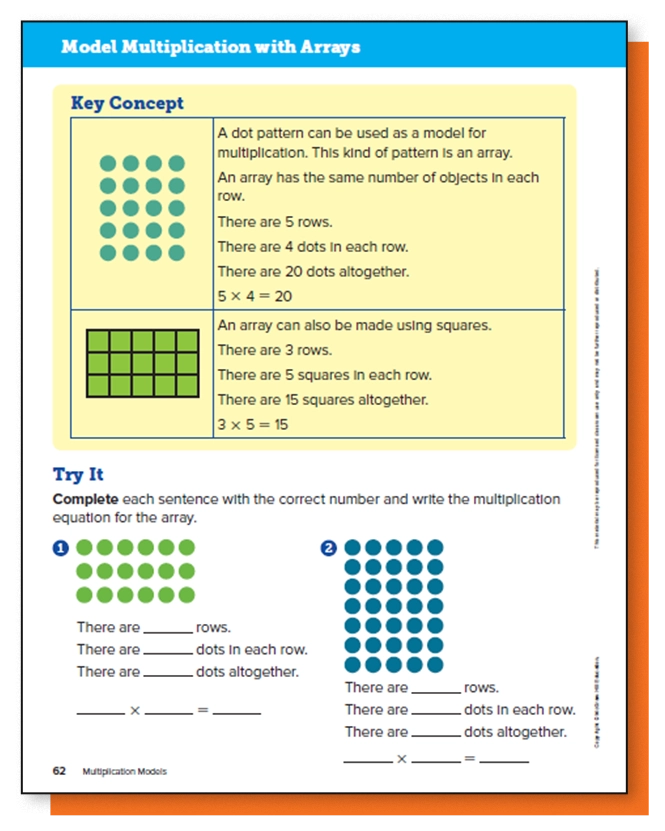
Skills Support Sheets are skill-based practice sheets that provide targeted practice of previously taught items.
Top
Regional Page Available
It looks like you're outside the United States. Do you want to see your regional version of this page?
2026-07-31T15:37:35.671-04:00
prek12 In the Classroom <h1><span class="fw-semibold"><span class="text-white"><span class="h2"><b><span class="lh-1"><i>Reveal Math</i> K–8<br> In the Classroom</span></b></span></span></span></h1> I want to learn about... <h2><span style="color: rgb(0,137,207);"><span class="fw-semibold">Flexible Lessons That Further Learning</span></span></h2> <p>Explore mathematics through a flexible five-part lesson design, complete with teacher’s choice between two instructional options to help serve all types of learners in your classroom. This routine-based approach helps streamline daily instruction around fluency, sense-making, and math language for a more structured, productive classroom environment.</p> Explore Reveal Math K-5 Flexible Lessons Grades K–5 Explore Reveal Math 6-8 Flexible Lessons Grades 6–8 <h2><span style="color: rgb(0,137,207);"><span class="fw-semibold">Go Beyond Rote Memorization</span></span></h2> <h3><span class="fw-light">Build Mathematical Fluency</span></h3> <p>Fluency is more than memorization; it’s about having a deep-rooted understanding and mastery of operations, relationships, and concepts. <i>Reveal Math</i> structures daily fluency activities around practice, routines, spiral review, and game-based learning—engaging students in the lesson content and developing their application of strategy to solve unknown problems.</p> Reveal Math Fluency Practice Lesson Sample Carousel Slide 1 Slide 2 Slide 3 Slide 4 <h3>Support Language Acquisition</h3> <p>Mathematics is not just a series of operations, but a complex language of its own. To help develop and promote the use of math language skills, <i>Reveal Math</i> incorporates a variety of supports throughout each unit and lesson:</p> <p>First accordion item</p> <p><b>Math Language Development</b> mini-lessons in every unit offer designated language support for English Learners and can be taught at any time during the unit.</p> <p><b>Math Language Development</b> mini-lessons in every unit offer designated language support for English Learners and can be taught at any time during the unit.</p> Math Language Development Multilingual Learner Scaffolds Language Objectives Langauge of Math Math Language Routines <p><b>Multilingual Learner Scaffolds</b> based on WIDA levels (Emerging, Expanding, and Bridging) provide instructional support in English language development as well as differentiated support in math in every lesson.</p> <p><b>Language Objectives</b> in each lesson identify a linguistic focus for all learners.</p> <p><b>Language of Math</b> promotes the development of key vocabulary terms to support contextual applications.</p> <p>Developed by the Stanford Center for Assessment, Learning, and Equity, <b>Math Language Routines</b> in every lesson promote all students’ language development in mathematical sense making.</p> <p><b>Math Language Development</b> mini-lessons in every unit offer designated language support for English learners and can be taught at any time during the unit.</p> <p><b>Multilingual Learner Scaffolds</b> based on WIDA levels (Emerging, Expanding, and Bridging) provide instructional support in English language development as well as differentiated support in math in every lesson.</p> <p><b>Language Objectives</b> in each lesson identify a linguistic focus for all learners.</p> <p><b>Language of Math</b> promotes the development of key vocabulary terms to support contextual applications.</p> <p>Developed by the Stanford Center for Assessment, Learning, and Equity, <b>Math Language Routines</b> in every lesson promote all students’ language development in mathematical sense-making.</p> <h2><span class="fw-semibold">Assess and Address Needs</span></h2> <p><i>Reveal Math </i>offers a comprehensive set of diagnostic, formative, and summative assessment tools—all available in both print and digital formats. With this data, teachers can generate actionable performance reports (Class Activity Reports and Standards Reports) in the Digital Teacher Center to help them make data-driven instructional decisions.</p> <h3><span class="text-white"><span class="text-black">Type: Diagnostic</span></span></h3> Table showing Reveal Math Diagnostic Tool with Assessment Type, Frequency, and Description <p>TYPE</p> <p>ASSESSMENT </p> <p>HOW OFTEN</p> <p>DESCRIPTION</p> <p><b>Formative</b></p> <p><b>Formative</b></p> <p><b>Course Diagnostic</b></p> <p>Diagnoses students’ strengths and weaknesses with prerequisite concepts and skills for the upcoming year</p> <p>Beginning of the school year</p> <p><span class="fw-semibold">Work Together*</span><span class="fw-medium"><br> </span><span class="fw-light"><i>only applies to K–5</i></span></p> <p><span class="fw-medium">During a lesson</span></p> <p><span class="fw-medium">Assesses students’ understanding of the concepts and skills presented in Learn</span></p> <p><span class="fw-semibold">Exit Ticket</span></p> <p><span class="fw-medium">End of each lesson</span></p> <p><span class="fw-medium">Assesses students’ conceptual understanding and procedural fluency with lesson concepts and skills</span></p> <p><b>Formative</b></p> <p><b>Formative</b></p> <p><span class="fw-semibold">Quiz: Lesson Quiz*</span><br> <i><span class="fw-light">only applies to 6–8</span></i></p> <p><span class="fw-medium">After a Lesson</span></p> <p><span class="fw-medium">Assesses student conceptual understanding with lesson concepts and skills.</span></p> <p><span class="fw-semibold">Math Probe</span></p> <p><span class="fw-medium">During a unit</span></p> <p><span class="fw-medium">Identifies common misconceptions</span></p> <p><b>Diagnostic</b></p> <p><b>Diagnostic</b></p> <p><span class="fw-medium">Course Diagnostic</span></p> <p><span class="fw-medium">Unit Diagnostic</span></p> <p><span class="fw-medium">Beginning of each unit</span></p> <p><span class="fw-medium">Diagnoses students’ strengths and weaknesses with prerequisite concepts and skills for the upcoming year</span></p> <p><span class="fw-medium">Diagnoses students’ strengths and weaknesses with prerequisite concepts and skills for the upcoming unit</span></p> <p><span class="fw-medium">Beginning of the school year</span></p> <p><b>Summative</b></p> <p><b>Summative</b></p> <p><b>Summative</b></p> <p><b>Summative</b></p> <p><span class="fw-medium">Unit Assessment, Forms A and B</span></p> <p><span class="fw-medium">Unit Performance Task</span></p> <p><span class="fw-medium">Benchmark Assessments</span></p> <p><span class="fw-medium">Summative Assessment</span></p> <p><span class="fw-medium">End of each unit</span></p> <p><span class="fw-medium">End of each unit</span></p> <p><span class="fw-medium">After multiple units</span></p> <p><span class="fw-medium">End of the school year</span></p> <p><span class="fw-medium">Evaluates students’ understanding of and fluency with unit concepts and skills</span></p> <p><span class="fw-medium">Evaluates students’ ability to apply concepts and skills learned</span></p> <p><span class="fw-medium">Evaluates students’ understanding of concepts and skills taught in multiple units</span></p> <p><span class="fw-medium">Evaluates students’ proficiency with concepts and skills taught over the school year</span></p> <h3><span class="text-white"><span class="text-black">Type: Formative</span></span></h3> Table showing Reveal Math Formative Tool with Assessment Type, Frequency, and Description <p>TYPE</p> <p>ASSESSMENT </p> <p>HOW OFTEN</p> <p>DESCRIPTION</p> <p><b>Formative</b></p> <p><b>Formative</b></p> <p><b>Course Diagnostic</b></p> <p>Diagnoses students’ strengths and weaknesses with prerequisite concepts and skills for the upcoming year</p> <p>Beginning of the school year</p> <p><span class="fw-semibold">Work Together*</span><span class="fw-medium"><br> </span><span class="fw-light"><i>only applies to K–5</i></span></p> <p><span class="fw-medium">During a lesson</span></p> <p><span class="fw-medium">Assesses students’ understanding of the concepts and skills presented in Learn</span></p> <p><span class="fw-semibold">Exit Ticket</span></p> <p><span class="fw-medium">End of each lesson</span></p> <p><span class="fw-medium">Assesses students’ conceptual understanding and procedural fluency with lesson concepts and skills</span></p> <p><b>Formative</b></p> <p><b>Formative</b></p> <p><span class="fw-semibold">Lesson Quiz*</span><br> <i><span class="fw-light">only applies to 6–8</span></i></p> <p><span class="fw-medium">After a lesson</span></p> <p><span class="fw-medium">Assesses student conceptual understanding with lesson concepts and skills.</span></p> <p><span class="fw-semibold">Math Probe</span></p> <p><span class="fw-medium">During a unit</span></p> <p><span class="fw-medium">Identifies common misconceptions</span></p> <p><b>Diagnostic</b></p> <p><b>Diagnostic</b></p> <p><span class="fw-medium">Course Diagnostic</span></p> <p><span class="fw-medium">Unit Diagnostic</span></p> <p><span class="fw-medium">Beginning of each unit</span></p> <p><span class="fw-medium">Diagnoses students’ strengths and weaknesses with prerequisite concepts and skills for the upcoming year</span></p> <p><span class="fw-medium">Diagnoses students’ strengths and weaknesses with prerequisite concepts and skills for the upcoming unit</span></p> <p><span class="fw-medium">Beginning of the school year</span></p> <p><b>Summative</b></p> <p><b>Summative</b></p> <p><b>Summative</b></p> <p><b>Summative</b></p> <p><span class="fw-medium">Unit Assessment, Forms A and B</span></p> <p><span class="fw-medium">Unit Performance Task</span></p> <p><span class="fw-medium">Benchmark Assessments</span></p> <p><span class="fw-medium">Summative Assessment</span></p> <p><span class="fw-medium">End of each unit</span></p> <p><span class="fw-medium">End of each unit</span></p> <p><span class="fw-medium">After multiple units</span></p> <p><span class="fw-medium">End of the school year</span></p> <p><span class="fw-medium">Evaluates students’ understanding of and fluency with unit concepts and skills</span></p> <p><span class="fw-medium">Evaluates students’ ability to apply concepts and skills learned</span></p> <p><span class="fw-medium">Evaluates students’ understanding of concepts and skills taught in multiple units</span></p> <p><span class="fw-medium">Evaluates students’ proficiency with concepts and skills taught over the school year</span></p> <h3><span class="text-white"><span class="text-black">Type: Summative</span></span></h3> Table showing Reveal Math Summative Tool with Assessment Type, Frequency, and Description <p>TYPE</p> <p>ASSESSMENT </p> <p>HOW OFTEN</p> <p>DESCRIPTION</p> <p><b>Formative</b></p> <p><b>Formative</b></p> <p><b>Course Diagnostic</b></p> <p>Diagnoses students’ strengths and weaknesses with prerequisite concepts and skills for the upcoming year</p> <p>Beginning of the school year</p> <p><span class="fw-semibold">Work Together*</span><span class="fw-medium"><br> </span><span class="fw-light"><i>only applies to K–5</i></span></p> <p><span class="fw-medium">During a lesson</span></p> <p><span class="fw-medium">Assesses students’ understanding of the concepts and skills presented in Learn</span></p> <p><span class="fw-semibold">Exit Ticket</span></p> <p><span class="fw-medium">End of each lesson</span></p> <p><span class="fw-medium">Assesses students’ conceptual understanding and procedural fluency with lesson concepts and skills</span></p> <p><b>Formative</b></p> <p><b>Formative</b></p> <p><span class="fw-semibold">Quiz: Lesson Quiz*</span><br> <i><span class="fw-light">only applies to 6–8</span></i></p> <p><span class="fw-medium">After a Lesson</span></p> <p><span class="fw-medium">Assesses student conceptual understanding with lesson concepts and skills.</span></p> <p><span class="fw-semibold">Math Probe</span></p> <p><span class="fw-medium">During a unit</span></p> <p><span class="fw-medium">Identifies common misconceptions</span></p> <p><b>Diagnostic</b></p> <p><b>Diagnostic</b></p> <p><span class="fw-medium">Course Diagnostic</span></p> <p><span class="fw-medium">Unit Diagnostic</span></p> <p><span class="fw-medium">Beginning of each unit</span></p> <p><span class="fw-medium">Diagnoses students’ strengths and weaknesses with prerequisite concepts and skills for the upcoming year</span></p> <p><span class="fw-medium">Diagnoses students’ strengths and weaknesses with prerequisite concepts and skills for the upcoming unit</span></p> <p><span class="fw-medium">Beginning of the school year</span></p> <p><b>Summative</b></p> <p><b>Summative</b></p> <p><b>Summative</b></p> <p><b>Summative</b></p> <p><span class="fw-medium">Unit Assessment, Forms A and B</span></p> <p><span class="fw-medium">Unit Performance Task</span></p> <p><span class="fw-medium">Benchmark Assessments</span></p> <p><span class="fw-medium">Summative Assessment</span></p> <p><span class="fw-medium">End of each unit</span></p> <p><span class="fw-medium">End of each unit</span></p> <p><span class="fw-medium">After multiple units</span></p> <p><span class="fw-medium">End of the school year</span></p> <p><span class="fw-medium">Evaluates students’ understanding of and fluency with unit concepts and skills</span></p> <p><span class="fw-medium">Evaluates students’ ability to apply concepts and skills learned</span></p> <p><span class="fw-medium">Evaluates students’ understanding of concepts and skills taught in multiple units</span></p> <p><span class="fw-medium">Evaluates students’ proficiency with concepts and skills taught over the school year</span></p> Reveal Math Math Probes worksheets showing proportional relationships <h3><span class="fw-light">Identify and Rectify Misconceptions</span></h3> <p>Uncover students’ misconceptions with <b>Math Probes</b>, located at point-of-use to help teachers make informed instructional choices targeting specific math concepts. Each probe begins by assessing students’ understanding of concepts and then asks them to share their thinking. Once misconceptions are identified, teachers can correct them quickly and efficiently with provided remedies.</p> Reveal Math Math Probes worksheets showing proportional relationships example screenshot of graph showing Map Growth performance in the reports section of Reveal Math online <h3><span class="fw-light">Measure Knowledge With <i>MAP Growth</i>™</span></h3> <p><i>MAP Growth</i> is the market’s most trusted and accurate interim assessment that measures what students know and what they’re ready to learn next. <i>Reveal Math</i> teachers can access powerful <i>MAP Growth</i> data to review unique reports, identify students lacking prerequisite knowledge, and intervene using Targeted Skills Paths to fill knowledge gaps.</p> Download MAP Growth Flyer Download MAP Growth Flyer Unit resources exmaple on laptop screen, Readiness Diagnostic, Targeted Intervention <h3><span class="fw-semibold">Close Skills Gaps With Targeted Intervention</span></h3> <p>Intervention resources align with each problem within every Unit Assessment and Readiness Diagnostic—a digital intervention tool that assesses and aligns to the prerequisite skills needed to understand the upcoming unit—making it easy to correct misunderstandings and target knowledge gaps.</p> Unit resources exmaple on laptop screen, Readiness Diagnostic, Targeted Intervention View Take Another Look Product Features digital mini lesson example on tablet screen - 4 groups of 4 crayon boxes, multiplication 4x 8 <p><b>Take Another Look</b> digital mini-lessons provide quick, actionable data to help inform instruction while supporting each student with a three-part, gradual-release activity:</p> <ul> <li>Modeling</li> <li>Interactive Practice</li> <li>Lesson Check</li> </ul> instructions for guided support activity including, materials, beginning the activity, concluding the activity and questions <p><b>Guided Support</b> provides a teacher-facilitated, small group mini-lesson that uses concrete modeling and discussion to build conceptual understanding.</p> Skills Support worksheet example, Model Multiplication with Arrays, Key Concepts and Try it <p><b>Skills Support Sheets</b> are skill-based practice sheets that provide targeted practice of previously taught items.</p> View Take Another Look Digital Mini-lessons Take Another Look View Take Another Look Guided Support Guided Support View Take Another Look Skills Support Sheets Skills Support Sheets