2026-08-03T09:16:20.678-04:00
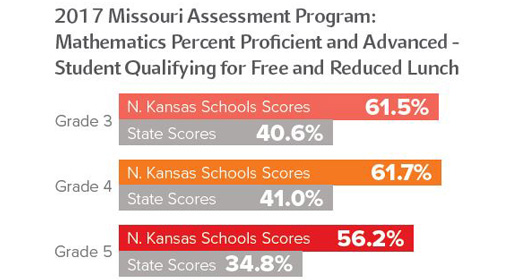
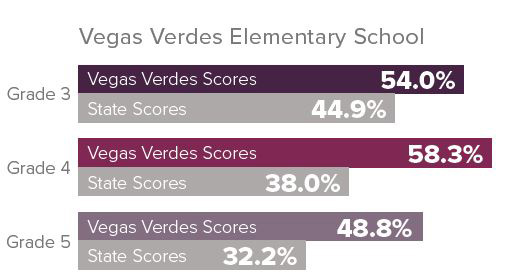
prek12 Research & Success Everyday Mathematics <h1><span class="text-white">Research and Success for <i>Everyday Mathematics</i>: <br> A K–6 Math Curriculum</span></h1> <h2>The University of Chicago Mathematics Project</h2> <p><i>Everyday Mathematics</i> is developed by education researchers at the University of Chicago School Mathematics Project (UCSMP). This group is dedicated to helping children learn mathematics using a research-based approach.</p> <p><i>Everyday Mathematics</i> is the most research-grounded and field-tested elementary mathematics program available today.</p> <ul> <li>When the program was developed, each lesson was field tested at each grade for a full year</li> <li>800+ students participated in field testing 170 lessons</li> <li>Open Response problems, as well as Open Response and Reengagement Lessons were field tested by 1,400+ students</li> </ul> View Research Everyday Mathematics Research-Based Classroom-Proven, Grades K–6 <h2>Maximizing Achievement with <i>Everyday Mathematics</i></h2> <p><i>Everyday Mathematics</i> is recognized by the U.S. Department of Education What Works Clearinghouse as the most effective core elementary mathematics program in the country. Hear from educators using the program how it has impacted students in their schools.</p> <h2>Success for <i>Everyday Mathematics</i><br> </h2> <h3>Success Stories</h3> <p>There is no better evidence of the program’s effectiveness than the children with increased confidence and excitement about math which has led to gains in achievement across the country.</p> North Kansas elementary schools have seen a significant increase in math scores across every group, including Free & Reduced Lunch. chart showing 2017 Missouri Assessment Program: Mathematics Percent Proficient and Advanced- Student Qualifying for Free and Reduced Lunches Kansas City, MO Students using Everyday Mathematics performed well above the Nevada average on the 2017 SBAC. chart showing improvement in scores for Vegas Verde Elementary School for Grades 3-5 in comparison to state scores Clark County, NV <p><a href="https://www.mheducation.com/unitas/school/explore/sites/everyday-math/2020/case-study-stamford.pdf" target="_blank">Stamford Public Schools</a><br> Stamford, CT</p> <p><a href="https://www.mheducation.com/unitas/school/explore/sites/everyday-math/2020/case-study-champaign.pdf" target="_blank">Champaign Unit #4</a><br> Champaign, IL</p> <p><a href="https://www.mheducation.com/unitas/school/explore/sites/everyday-math/2020/case-study-johnston-ia.pdf" target="_blank">Johnston Community <span>School District<br> </span></a><span style="background-color: rgba(var(--bs-white-rgb), var(--bs-bg-opacity)); font-size: var(--bs-body-font-size); font-weight: var(--bs-body-font-weight);">Des Moines, IA</span></p> <p><a href="https://www.mheducation.com/unitas/school/explore/sites/everyday-math/2020/case-study-boston.pdf" target="_blank">John Eliot School & Harvard-Kent Elementary School</a><br> Boston, MA</p> <p><a href="https://www.mheducation.com/unitas/school/explore/sites/everyday-math/2020/case-study-wicomico-md.pdf" target="_blank">Wicomico County Public Schools</a><br> Salisbury, MD</p> <p><a href="https://www.mheducation.com/unitas/school/explore/sites/everyday-math/2020/case-study-columbia-mo.pdf" target="_blank">Columbia Public Schools</a><br> Columbia, MO</p> <p><a href="https://www.mheducation.com/unitas/school/explore/sites/everyday-math/2020/case-study-santa-fe.pdf" target="_blank">Acequia Madre Elementary</a><br> Santa Fe, NM</p> <p><a href="https://www.mheducation.com/unitas/school/explore/sites/everyday-math/2020/case-study-union-ok.pdf" target="_blank">Union Public Elementary Schools</a><br> Tulsa, OK</p> <p><a href="https://www.mheducation.com/unitas/school/explore/sites/everyday-math/2020/case-study-norman.pdf" target="_blank">Norman Public Elementary Schools</a><br> Norman, OK</p> <h3>White Papers</h3> <p>Development of each version of <i>Everyday Mathematics</i> begins with a research phase during which the authors review the most current research available related to how children learn. These white papers summarize some of the research behind the program.</p> <p><a href="https://www.mheducation.com/unitas/school/explore/sites/everyday-math/em-white-paper-research-behind-em-spiral.pdf" target="_blank">The Research Behind the <i>Everyday Mathematics</i> Spiral</a></p> <p><a href="https://www.mheducation.com/unitas/school/explore/sites/everyday-math/em-white-paper-bibliograhy-research-concerning-implementations-of-em.pdf" target="_blank">Bibliography of Research Concerning Implementations of <i>Everyday Mathematics</i></a></p> <p><a href="https://www.mheducation.com/unitas/school/explore/sites/everyday-math/em-white-paper-fact-fluency-in-em.pdf" target="_blank">Fact Fluency in <i>Everyday Mathematics</i></a></p> <h3>Testimonials</h3> <h3><span class="text-white">Student Learning</span></h3> <p><span style="color: #004685;">More students are enjoying math. They are learning in a fun way instead of just opening up a book and memorizing facts.</span></p> <p><span style="color: #004685;">Jon K., Curriculum Associate for Elementary and Science, Stamford, CT</span></p> <p><span style="color: rgb(0,70,133);"><i>Everyday Mathematics</i> really brought to light the process of learning math and not just the end-result...our kids are much better problem solvers than they were before.</span></p> <p><span style="color: rgb(0,70,133);">Paige B., Instructional Coach, Tulsa, OK</span></p> <p><span style="color: rgb(0,70,133);"><i>Everyday Mathematics 4</i> is much heavier in reading and writing. They have fewer problems to solve and a lot more explaining to do about their thinking.</span></p> <p><span style="color: rgb(0,70,133);">Ahlum S., Principal, Sante Fe, NM</span></p> <h3><span class="text-white">Performance and Results</span></h3> <p><span style="color: rgb(0,70,133);">The results that we’ve seen in our achievement scores are really strong. Every group within our demographics is reaping the benefits.</span></p> <p><span style="color: rgb(0,70,133);">Chad S., Assistant to the Superintendent for PreK–8, North Kansas City, KS</span></p> <p><span style="color: rgb(0,70,133);">Across the board, our math scores are the highest they’ve ever been.</span></p> <p><span style="color: rgb(0,70,133);">Jason G., Principal, Boston, MA</span></p> <p><span style="color: #004685;">I’m seeing a big difference in student performance since we started using <i>Everyday Mathematics</i>. Students have a better understanding of not just what the answer is, but why the answer is what it is.</span></p> <p><span style="color: rgb(0,70,133);">Jon K., Curriculum Associate for Elementary and Science, Stamford, CT</span></p> <h3><span class="text-white">Alignment to Standards</span></h3> <p><span style="color: rgb(0,70,133);">Teachers really like that they can work on a standard, then later, the same standard will come up for students to developmentally process and learn.</span></p> <p><span style="color: rgb(0,70,133);">Judi P., Assistant Coordinator for K–5 Math, Columbia, MO</span></p> <p><span style="color: rgb(0,70,133);">We now have the opportunity to have fewer lessons, go more in-depth with the lessons we do, and really focus on the standards.</span></p> <p><span style="color: rgb(0,70,133);">Natalie E., Director for School Improvement and PD, Stamford, CT</span></p> <p><span style="color: rgb(0,70,133);">We're extremely happy that <i>Everyday Mathematics 4</i> now has a line to the Common Core. It provides a much clearer pathway for teachers and students to do the lesson components, in terms of how concepts are introduced.</span></p> <p><span style="color: rgb(0,70,133);">Susan Z., Assistant Superintendent, Champaign, IL</span></p> <h3><span class="text-white">Support for Everyone</span></h3> <p><span style="color: rgb(0,70,133);"><i>Everyday Mathematics</i> offers clear-cut guidance for teachers, whether you’re a first-year teacher or have 20 years of experience.</span></p> <p><span style="color: rgb(0,70,133);">Emily M., 5th Grade Math Teacher, Clark County, NV</span></p> <p><span style="color: rgb(0,70,133);">It gives parents information so they can better help their children.</span></p> <p><span style="color: rgb(0,70,133);">Julie D., Elementary Math Supervisor, Wicomico County, MD</span></p> <p><span style="color: rgb(0,70,133);"><i>Everyday Mathematics</i> is a research-based program that gives students the strong mathematical foundation they need as they grow older.</span></p> <p><span style="color: rgb(0,70,133);">Nita C., Math Curriculum Coordinator, Norman, OK</span></p> <h3>Efficacy</h3> <p>McGraw Hill works tirelessly to ensure that our programs demonstrate positive effects across settings and with a variety of relevant educational outcomes. Our approach to evidence-based research and efficacy recognizes the value of smaller studies of program pilots and first-year implementations as well as larger experimental studies. The focus of all our research is to propel learners toward higher levels of achievement. Although it is important that our programs can demonstrate effectiveness in highly-controlled lab-like settings, our goal is to ensure that they work for real teachers in real-life situations under standard implementation conditions.</p> <p>Our commitment to research includes working with world-class academics and practitioners in education to help design, develop, and validate instructional models that are based on current scholarship, establish efficacy, and support effective teaching and learning.</p> <p><i>Everyday Mathematics</i> is committed to continuously improving the instructional quality and academic integrity of program materials.</p> Success Stories White Papers Efficacy Efficacy <h2>Third Party Research for <i>Everyday Mathematics</i></h2> Longitudinal Study Achievement Study Clearinghouse ACE Evaluation in Michigan <h3>The Northwestern Longitudinal Study</h3> <p><i>Everyday Mathematics</i> was the focus of a five-year longitudinal curriculum study from Northwestern University. It included student and teacher interviews, classroom observations, written tests, collected artifacts, and surveys. Items on written tests were drawn from the National Assessment of Educational Progress (NAEP), from international studies of mathematics achievement, and from the research literature. </p> <p>Researchers using the data and findings of the Northwestern study have found that <i>Everyday Mathematics</i> students constantly outperform comparison students. </p> View The Northwestern Longitudinal Study View Research <h3>Tri-State Achievement Study</h3> <p>The ARC Center, located at the Consortium for Mathematics and its Applications (COMAP), completed an NSF-funded study that compared the effects of standards-based mathematics programs on student performance with state-mandated standardized tests in Massachusetts, Illinois, and Washington. </p> <p>The reports’ findings are based on the records of over 78,000 students: 39,701 who had used the <i>Everyday Mathematics </i>curriculum for at least two years and 38,481 students from comparison schools. The students were carefully matched by reading level, socioeconomic status, and other strata. </p> <p>Results showed that the average scores of students in the <i>Everyday Mathematics</i> schools were consistently higher than those in the comparison schools. The results hold across different state-mandated tests and across topics ranging from computation, measurement, and geometry to algebra, problem-solving, and making connections. </p> View Tri-State Achievement Study View Research <h3>What Works ClearingHouse™ Improvement Index</h3> <p>The U.S. Department of Education What Works Clearinghouse™ recognizes <i>Everyday Mathematics</i> as the most effective core elementary mathematics program in the country. </p> View What Works ClearingHouse™ Improvement Index View Research <h3>ACE Evaluation in Michigan</h3> <p> Twelve school districts in Michigan have adopted McGraw Hill’s <i>Everyday Mathematics</i>. In 2019, the Auburn Center for Evaluation (ACE) was asked to analyze mathematics test data from the state of Michigan’s Michigan Student Test of Educational Proficiency for students served by the program to answer this main research question: "To what extent is the utilization of McGraw Hill’s elementary mathematics curriculum associated with differences in year-end standardized test scores?"</p> <p>Key Findings</p> <ol> <li>Overall, students enrolled in school districts using the McGraw Hill curriculum had proficiency rates that were greater than demographically matched peers.</li> <li>Non-White McGraw Hill students performed substantially outperformed non-White matched peers on the math M-STEP.</li> <li>Fourth and fifth-grade McGraw Hill students significantly outperformed their matched peers by gender.</li> <li>Fourth and fifth-grade economically disadvantaged McGraw Hill students had proficiency rates that were 20% greater than their matched peers.</li> </ol> View ACE Evaluation in Michigan View Research