McGraw Hill Math
Learning Levels
-
PreK–12

McGraw Hill Math
Empower every student on their path to math confidence with complete PreK–AP math solutions.
With the right personalized pathway, every student can find confidence and joy in math. Only McGraw Hill Math supports teachers with everything they need to guide each student on their own pathway to success. Explore our integrated suite of core, intervention, and supplemental programs—and discover how we can help you add up results with confident, joyful teachers and learners.
Drive remediation, acceleration, and differentiation with rich data
Every student’s journey to find success and experience joy in learning math will be different, and that’s OK. Our comprehensive, connected solutions enable the flexibility to match every educator’s teaching style and meet every learner’s needs with data-driven, personalized, differentiated learning. A game-changer for any classroom, only McGraw Hill Math’s personalized learning ecosystem, powered by artificial intelligence (AI), draws on rich, accurate student performance data to assess learning quickly and deliver the best pathway forward.



Get results with trusted content, technology, and pedagogy
When every moment spent on math instruction counts, you need reliable content, technology, and pedagogical support you can trust. McGraw Hill Math’s research-based solutions were developed from the science of how learning happens, authored by a preeminent team of math education experts, and proven to be effective—for all students. Our innovative technology is designed to integrate seamlessly into any classroom, and our AI-driven tools deliver powerful results based on precise student performance data in near real time.

Core Spotlight:
Reveal Math®
We developed Reveal Math in collaboration with expert authors, leading scholars, researchers, and educators. At its core are specific areas of focus that have emerged from numerous learning science domains essential to strengthening the teaching and learning of mathematics.


Find flexible instruction to match every need and style
McGraw Hill Math solutions help make math more joyful for every teacher, with flexible instructional pathways to match any style; an array of core, intervention, and supplemental programs across a spectrum of pedagogical approaches; and plenty of embedded implementation support and guidance to meet every teacher’s needs. We empower educators with professional development—available in-person and asynchronously—designed to be ongoing, evolving, and differentiated, deepening teachers’ content knowledge and adapting to their individual levels of experience.



Cultivate joy in learning and discovering math
McGraw Hill Math leads the way with carefully designed programs that build confidence in students through authentic learning, productive struggle, and effective success-driven assessment. From AI solutions that motivate learners by giving them choices within their Zone of Proximal Development to explicit, structured programs that prompt teachers to give immediate feedback and positive reinforcement—every program ensures that every student builds confidence through joyful learning.


We’ll help you find the right combination of solutions. Request samples, get a quote, or ask us anything.
Math curriculum should do more than help you teach in the classroom—it should prepare students to apply math to real-life decision-making, find answers to challenging problems, and help students find joy in learning and discovering mathematics both in class and the world around them. From our legacy to the future of education, McGraw Hill Math’s foundational expertise sets us apart. Together, let’s show your students that their futures are even brighter when they succeed in math.


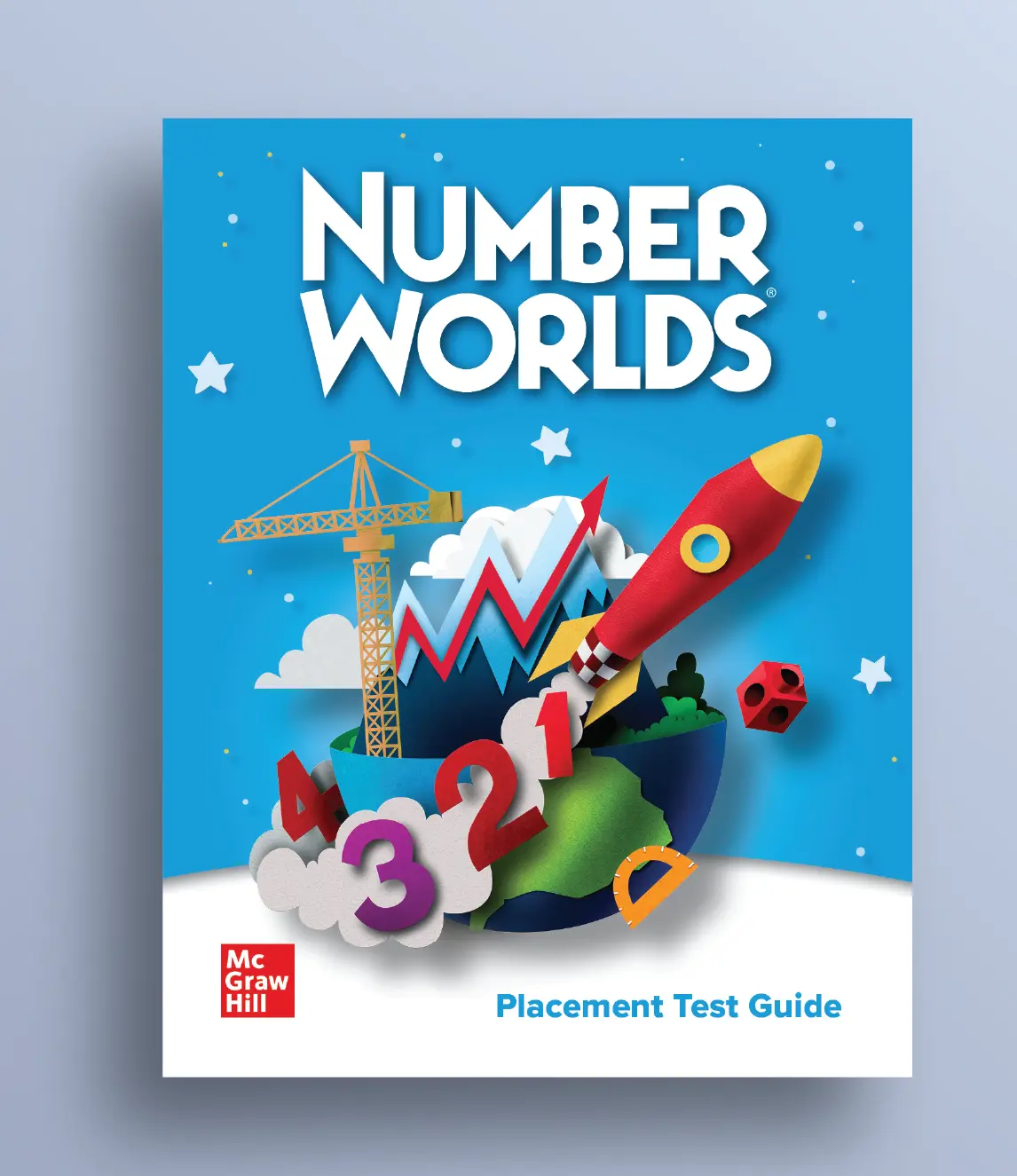



A good math curriculum should build strong foundational skills while developing problem-solving, critical-thinking, and mathematical reasoning. Combining core standards like numbers, operations, measurements, and data interpretation builds skills across all grade levels. Opportunities in math curriculum to apply learning to real-world situations with differentiated instruction can support students with different learning needs.
Elementary school math programs such as Reveal Math and Everyday Mathematics cover foundational skills that help students build confidence and prepare for more advanced classes. Common topics include counting and number sense, addition and subtraction, multiplication and division, fractions and decimals, place value, measurement, geometry, patterns, data and graphs, and problem-solving. As students progress through elementary grades, they apply these skills to problems and real-world situations that become more complex over time.
A core math curriculum is the main instructional program used to teach essential grade-level mathematics skills.It provides a structured sequence of lessons, activities, assessments, and instructional resources designed to support students as they develop mathematical knowledge, reasoning, and problem-solving skills.
A core math program provides students with appropriate grade-level instruction. Supplemental math programs provide additional practice, enrichment, or develop targeted skills alongside the core curriculum. For more intensive and targeted instruction, math intervention provides additional support to address learning gaps and work toward grade-level proficiency.
McGraw Hill offers solutions across all three areas to support the different needs of every student and classroom.
Personalized learning in math adapts instruction, practice, or learning pathways based on an individual student's strengths, needs, and progress. Student performance data can help educators identify what a learner already knows, where they need additional support, and what they are ready to learn next, allowing instruction to be more targeted and differentiated.
The personalized learning approach aligns closely with McGraw Hill Math solutions to support every student's individual learning path.
Schools should look for a math curriculum that aligns with academic standards, builds skills progressively, supports diverse learning needs, and helps students develop problem-solving skills and confidence in math. The right solution will depend on your students, educators, goals, and existing curriculum.
Contact your McGraw Hill representative to learn more about our math solutions and find the programs and resources that best fit your school or district’s needs.